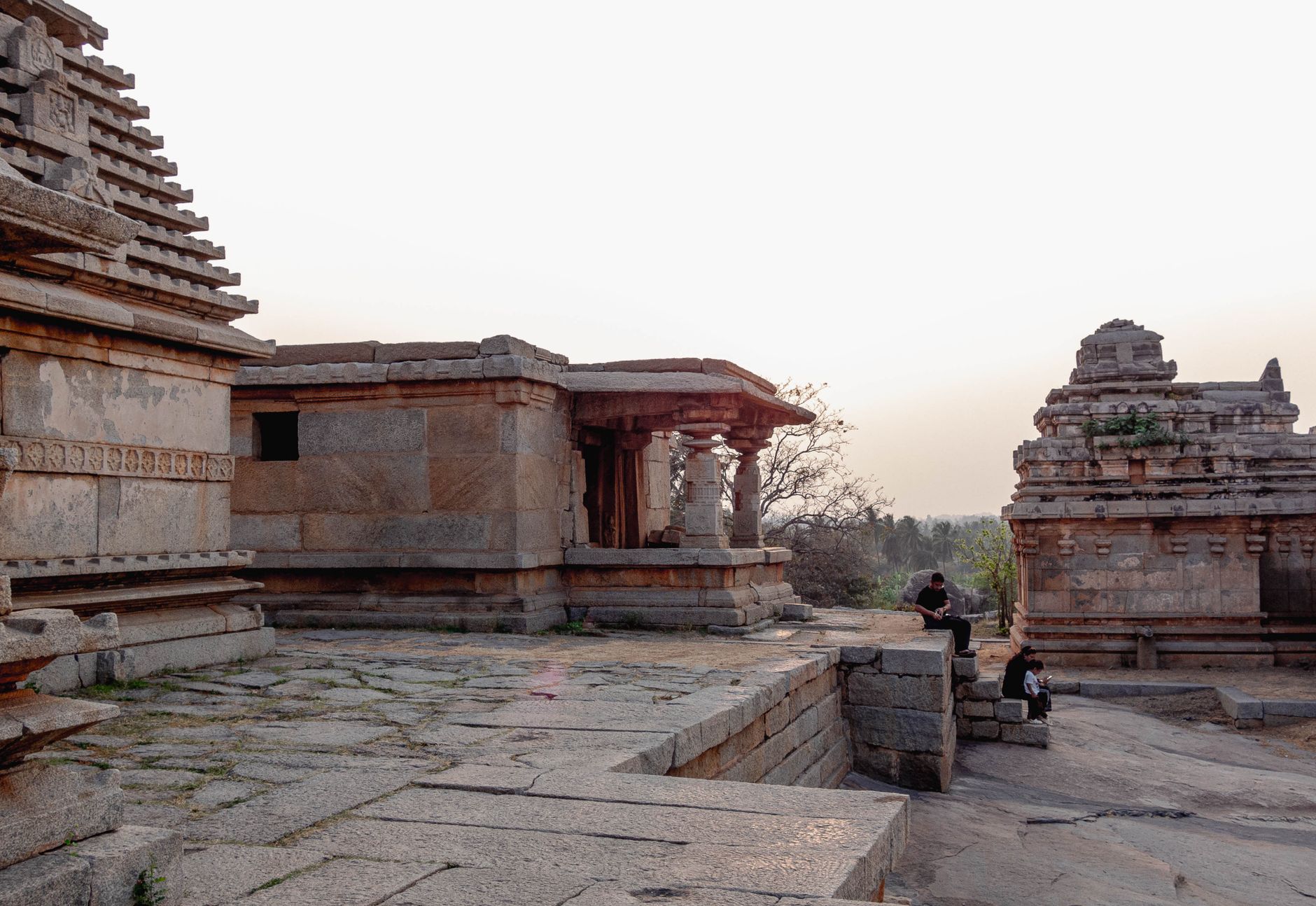
Hampi has several strong viewpoints for both sunrise and sunset, but they are not interchangeable — the orientation of the landscape, the direction specific hills face, and the density of ruins in each foreground all make certain spots dramatically better at particular times of day. Matanga Hill is the standout sunrise point; Hemakuta Hill and the Tungabhadra coracle ghats are the most rewarding for sunset. Read on for the full ranking with practical guidance.
Why does the direction of each viewpoint matter so much in Hampi?
The Tungabhadra runs broadly west to east through the Hampi basin, and the boulder landscape opens up in long vistas that face either north or south. Most of the major temple complexes — Virupaksha, Vittala, Achyutaraya — sit in the flat valley floor, which means that hills to their east catch the first light beautifully, while hills to the west hold the last gold of the day. Understanding this geography makes the difference between a spectacular morning and a frustrating one spent facing the wrong way.
Sunrise points ranked
1. Matanga Hill — the clear first choice
Matanga Hill sits almost centrally in the Hampi archaeological zone and rises steeply above the Virupaksha temple complex to the west and the Vittala temple road to the north. The climb takes around twenty minutes from the base near Hampi Bazaar — it is a genuine ascent over uneven boulder steps, and a torch is essential before first light. What you find at the top is one of the widest, most layered panoramas in all of Karnataka: the Virupaksha gopuram catches the earliest orange glow below you, the flat ruins of the royal enclosure stretch south, and the Tungabhadra river bends into the distance with the boulder-strewn hills of Anegundi on the far bank. Arrive at least fifteen minutes before sunrise, as the pre-dawn colours begin well before the sun clears the eastern ridge.
One important practical note: the Archaeological Survey of India sometimes restricts or manages access to Matanga Hill, so confirm current entry conditions the evening before at your accommodation.
2. Hemakuta Hill — beautiful and far more accessible
Hemakuta Hill sits immediately south of the Virupaksha temple and is dotted with pre-Vijayanagara Shaiva shrines that date to the ninth and tenth centuries. For sunrise it trails Matanga only because you are looking westward across the main bazaar rather than east into the rising sun — but on hazy mornings when the light diffuses softly, this limitation matters less. The hill is an easy ten-minute walk up scattered boulders and worn stone paths, making it genuinely suitable for those who don't want a strenuous pre-dawn climb. The silhouette of the Virupaksha tower against a pale pink sky, viewed from Hemakuta's upper terraces, is one of Hampi's most photographed compositions.
3. Anjaneya Hill (Anegundi side) — for the dedicated
Located across the river in Anegundi, Anjaneya Hill is traditionally associated with the birthplace of Hanuman and involves a climb of 575 steps. The sunrise view here looks back across the Tungabhadra towards the main Hampi ruins, giving you the unusual perspective of seeing the boulder landscape lit from behind. The cross-river logistics — either a morning coracle or the longer road route — make this better suited to travellers staying on the Anegundi side or those planning a full day exploring that village. Kishkinda Hertiage Resort sits in Anegundi itself, which makes the early morning timing considerably easier to manage.
Sunset points ranked
1. Hemakuta Hill at dusk — reliably the best overall
What Hemakuta lacks as a sunrise point it more than compensates for at sunset. The hill faces almost directly west and the ancient Jain and Shaiva shrines scattered across its surface create layered silhouettes as the light drops. The Virupaksha temple complex directly below glows ochre and saffron in the last hour before dark. Hemakuta is busy with other visitors in the late afternoon, but the hill is large enough that you can find a quieter boulder terrace away from the main congregation. Sunset here is around 6:45–7:00 pm in summer months and closer to 6:15 pm in winter.
2. The Tungabhadra coracle ghat near Virupaksha
Sitting at river level feels entirely different to watching from a hill. The coracle ghats below Virupaksha, where the water moves quietly between enormous rounded boulders, catch the last light on the water's surface and reflect the colours of the western sky in a way that no elevated viewpoint can replicate. This is a gentler, more contemplative experience — best for those who prefer atmosphere over panorama. The water level varies significantly by season; post-monsoon (October through December) the river is full and the reflections are at their most vivid.
3. Malyavanta Raghunatha Hill — quieter and underappreciated
This flat-topped hill to the northeast of the main ruins holds a Raghunatha temple that is still an active place of worship. The sunset view from here looks back across a wide stretch of the valley with fewer visitors than Hemakuta, and the foreground includes some of the less-visited eastern sections of the ruins. It is not as dramatically positioned as Hemakuta but rewards those who want a calmer, less crowded end to the day.
4. Vittala Temple surrounds at golden hour
The Vittala complex itself — home to the famous stone chariot and musical pillars — does not function as a viewpoint in the traditional sense, but the area around the temple in the hour before closing catches extraordinary warm light across the carved stonework. The stone chariot facing west means that late afternoon photography here is far more rewarding than morning visits. Entry fees apply and the site closes to visitors in the evening.
Where to stay for easy access to the best viewpoints
Your base matters quite a bit in Hampi, given that some viewpoints require pre-dawn departures. Staying close to Hampi Bazaar puts you within easy walking distance of both Matanga and Hemakuta.
Heritage Resort Hampii (4 stars, rated 8.6/10 from 1,221 reviews) is one of the better-regarded options for comfort without being far from the ruins. For a more atmospheric stay within walking distance of the main sites, Zostel Hampi (Gangavathi) (rated 8.5/10 from 341 reviews) suits independent travellers well. Those wanting the most luxurious experience in the region should look at WelcomHeritage Shivavilas Palace (5 stars, rated 9.1/10 from 133 reviews), though its distance from the ruins means you'll need transport for early starts. For the Anegundi side, Kishkinda Hertiage Resort places you closest to Anjaneya Hill.
For broader context on planning your visit, our Hampi travel guide covers logistics in detail, and the best time to visit Hampi page will help you choose a season when sunrise and sunset colours are at their most vivid.
Comparison at a glance
| Viewpoint | Best for | Effort level | Crowd level |
|---|---|---|---|
| Matanga Hill | Sunrise | High (steep climb) | Moderate |
| Hemakuta Hill | Sunset (also sunrise) | Low | High |
| Anjaneya Hill, Anegundi | Sunrise | High (575 steps) | Low–moderate |
| Tungabhadra coracle ghat | Sunset | Very low | Low |
| Malyavanta Hill | Sunset | Low–moderate | Low |
FAQ
What time should I arrive at Matanga Hill for sunrise? Plan to begin your climb at least forty minutes before the scheduled sunrise time for your date. In December and January, sunrise falls around 6:50 am; in May and June it is closer to 6:10 am. Use a torch for the ascent and wear footwear with grip — the boulder steps are uneven.
Is there an entry fee for Hampi's viewpoints? Matanga Hill and Hemakuta Hill do not charge a separate entry fee, though the broader Hampi archaeological site has a standard ASI entry fee for foreigners. The Vittala Temple complex has its own entry fee. Anjaneya Hill in Anegundi is free to climb.
Can I watch both sunrise and sunset on the same day from different points? Yes, and this is a genuinely good way to spend a full day in Hampi. Begin at Matanga Hill for sunrise, spend the morning exploring the valley ruins, rest during the hottest midday hours, then head to Hemakuta Hill for sunset. The two points are under two kilometres apart.
Which season gives the best light quality for sunrise and sunset? October through February offers the clearest skies and the warmest golden-hour tones. The post-monsoon weeks of late September and early October can be particularly dramatic, with occasional cloud formations above the boulders that catch the light in unusual ways. Summer months (April–June) produce haze that softens but sometimes flattens the colours.