Choosing between the main Hampi side and Hippie Island (locally known as Virupapur Gadde) comes down to what kind of trip you want. Stay on the Hampi side for direct access to the UNESCO-listed ruins, better road connectivity, and a wider range of hotel standards. Cross the Tungabhadra to Hippie Island for a quieter, more informal pace, where guesthouses sit among paddy fields and the mornings feel genuinely unhurried.
Hampi is one of those places that rewards a little planning, because the geography shapes your entire experience. The coracle ferry that connects the two sides runs on its own schedule — typically morning until early evening — and when it stops, the two worlds are effectively cut off from each other overnight. That single fact matters more than almost anything else when deciding where to base yourself.
For more on timing your trip, see our guide to the best time to visit Hampi and the full Hampi destination overview.
What is the difference between Hampi village and Hippie Island?

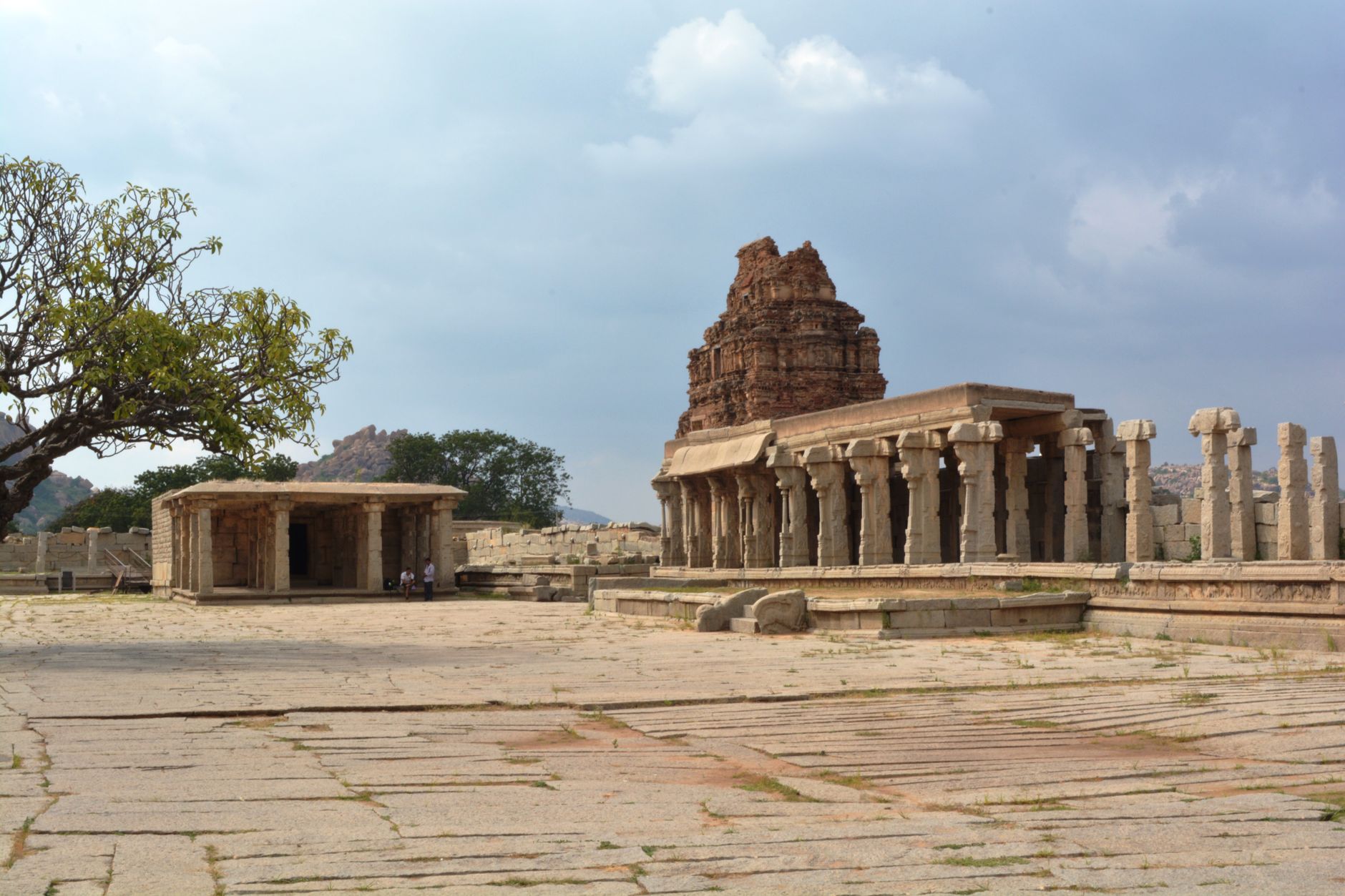
Hampi village, centred around the Virupaksha Temple bazaar street, sits on the south bank of the Tungabhadra. The main ruins — Vittala Temple with its stone chariot, Hazara Rama, the royal enclosure at Zanana — are all within cycling or auto-rickshaw distance from here. The village itself is a working pilgrimage town as much as a tourist destination, so mornings carry the sound of temple bells alongside chai stalls opening their shutters.
Hippie Island sits on the north bank, separated by the river, and earned its nickname through the long-stay backpacker culture that grew here from the 1990s onwards. The landscape is flatter and greener, with rice paddies, coconut groves, and the rocky Anjanadri Hill — believed to be the birthplace of Hanuman — rising above the fields. The accommodation is almost entirely small guesthouses and budget stays. The vibe is slower, and visitors here often arrive for a few days and find themselves still there a week later.
Who should stay on the Hampi side?

If your primary reason for visiting is the ruins themselves, staying on the Hampi side is the more sensible choice. You can be at the Vittala Temple compound at opening time, beat the midday heat among the Matanga Hill boulders, and return to your hotel for an afternoon rest without worrying about ferry timings. It also works better for anyone travelling with young children, older relatives, or on a tighter itinerary.
The range of accommodation on this side is considerably broader. For a genuinely comfortable stay, Heritage Resort Hampii (4 stars, rated 8.6/10 from over 1,200 reviews) is one of the most consistently praised properties in the area, with a pool and gardens that feel restorative after a long day in the heat. Hotel Malligi (3 stars, 8.6/10 from 1,148 reviews) offers excellent value and a reliable standard — good for travellers who want comfort without committing to resort pricing.
For those who want something closer to a heritage experience, WelcomHeritage Shivavilas Palace carries an exceptional 9.1/10 rating from 133 reviews, suggesting a property that delivers something genuinely distinct. Vijayshree Resorts, Hampi (5 stars, 7.5/10) and Royal Orchid Central Kireeti Hampi (4 stars, 7.9/10) round out the options for travellers who want more facilities.
For a government-run, no-frills option with historic character, KSTDC Hotel Mayura Bhuvaneshwari Kamalapur (3 stars, 7.4/10) sits near the archaeological museum at Kamalapur — slightly removed from the bazaar, but useful if you want to explore the southern ruins without the crowds of the main village.
Clarks Inn Hampi (4 stars, 7.6/10 from 933 reviews) and Hotel Hampi International (3 stars, 7.7/10) are both solid mid-range picks that won't surprise you with unexpected charm but will give you a clean, functional base.
Who should stay on Hippie Island?

Hippie Island suits travellers who want atmosphere over logistics — people who are happy to rent a bicycle and spend a morning cycling the dirt paths between boulders, who don't mind the ferry dependency, and who are drawn to the informal guesthouse culture where the same handful of guests ends up sharing a long table at dinner every evening.
The accommodation here tends to be simpler, but a few properties bring genuine character. Kishkinda Heritage Resort (3 stars, 7.3/10 from 225 reviews) is named after the mythological kingdom of Kishkinda that the region is associated with — it sits on the north bank and offers a more natural, open setting than the main village hotels. Leo Wooden Resort (3 stars, 7.6/10 from 113 reviews) is another option for those who want something distinct from the concrete-block guesthouses that dominate the island's budget end.
For budget travellers who still want social infrastructure — a common area, organised activities, reliable wifi — Zostel Hampi (Gangavathi) (3 stars, 8.5/10 from 341 reviews) has a strong rating and fits the Hippie Island spirit without entirely abandoning comfort. Worth noting: Zostel's Hampi property is technically listed under Gangavathi, so confirm the exact location and ferry access before booking.
How does the ferry crossing actually work?
The coracle ferry — a round, bowl-shaped basket boat that has been crossing this stretch of the Tungabhadra for centuries — runs from roughly 6am to 6pm, though timings shift with the season and water levels. During the monsoon (June to September), the river swells and the ferry sometimes stops entirely for days at a time, cutting Hippie Island off completely. If you are visiting between July and September, staying on the main Hampi side is the more practical choice unless you have a very flexible schedule.
There is also a road bridge further downstream that allows vehicles — and therefore auto-rickshaws — to cross, but it adds a significant detour and most travellers on the island side rely on the ferry for daily movement.
Which side has better food and nightlife?
Hampi is a heritage town under strict conservation rules, which means alcohol is officially restricted throughout the main village, and large commercial developments are not permitted. In practice, food on both sides is dominated by café-style restaurants serving traveller-oriented menus — banana pancakes, set dosas, pasta — alongside more authentic Karnataka thalis if you know where to look.
Hippie Island has the reputation for a more relaxed social scene, largely because it sits slightly outside the most regulated zone. Several rooftop cafés there attract long evenings of conversation. The Hampi side has the better access to local South Indian food, particularly around the temple town streets in the early morning.
FAQ
Can you visit Hampi's main ruins from Hippie Island? Yes, but you need to factor in the ferry crossing. Most major ruins are a bicycle ride or auto-rickshaw journey from the ferry landing on the Hampi side. Budget an extra 30–45 minutes each way compared to staying in the main village.
Is Hippie Island safe for solo travellers? Generally yes. The island has a well-established backpacker culture and solo travellers — including solo women — stay there regularly. As always, exercise standard precautions about walking isolated paths after dark.
Does the ferry run year-round? No. During the height of the monsoon season (typically July–August), high water levels can suspend the coracle ferry service for extended periods. Check locally before planning your stay on the island side during those months.
Which side is better for families with children? The Hampi side is considerably more practical for families. Better road access, more varied accommodation with proper facilities, and no dependency on a small boat crossing make it the easier choice when travelling with young children.